Key takeaways
Leading organizations are reframing skills based volunteering as a talent development tool — one that builds leadership, cross-functional capability and adaptability in ways classroom training cannot.
When positioned as skills development rather than charity, volunteering participation increases across all employee levels.
Measuring skills developed, not just hours donated, is the key to proving ROI and scaling your program.
Skills-based volunteering has always had the power to do good for communities and for society. What's becoming clearer is that it also has the power to create great outcomes for companies by developing great leaders, great teams and great organizations. The companies seeing the biggest returns are treating this as an effective talent development tool.
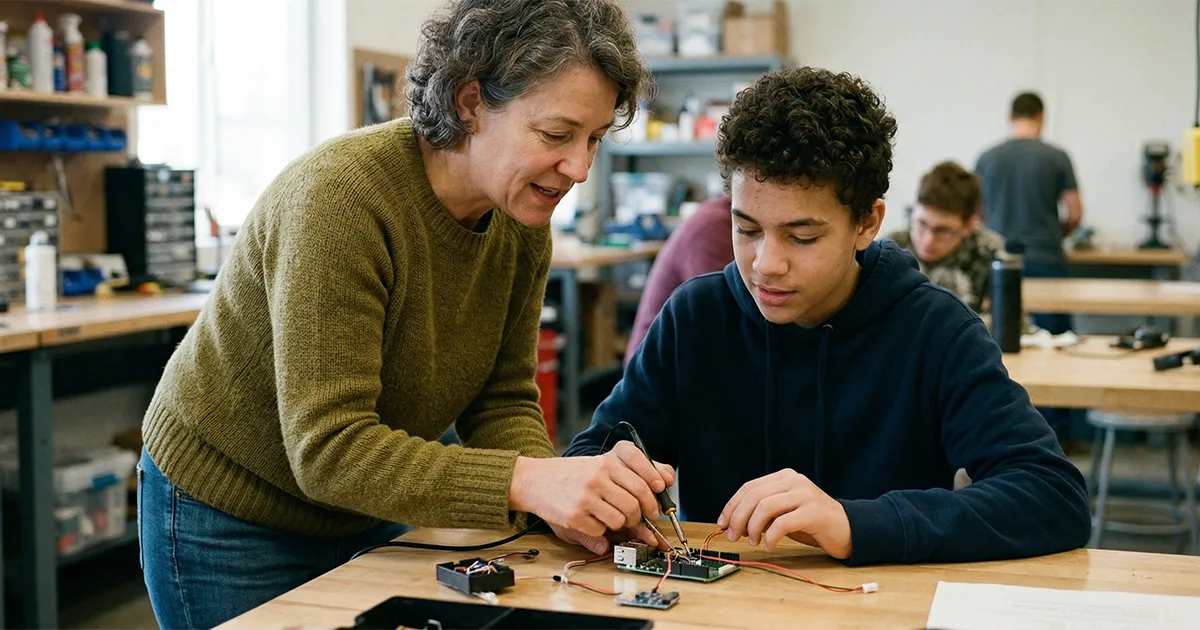
Skills-based volunteering positioned as development — rather than charity — opens the door to employees at every level, not just those who feel expert enough to donate. It creates real-world conditions for building leadership skills, cross-functional capabilities and adaptability that traditional training programs simply can't replicate. At SINGA, for example, finance, marketing and legal professionals work directly with immigrant entrepreneurs, applying their skills in unfamiliar, high-stakes contexts that stretch and sharpen them in equal measure.
The payoff is measurable: broader participation, demonstrable skill growth and stronger business impact alongside genuine community outcomes. This article explores how to make that shift from traditional pro bono thinking to strategic talent development through skills-based volunteering.
The pro bono mindset vs. the talent development mindset
These two frameworks lead to fundamentally different programs and outcomes:
The pro bono model assumes employees already have the skills they're donating. The talent development model assumes they're actively building them. That’s an important distinction.
When skills-based volunteering is framed as a leadership lab rather than an expert showcase, it increases the likelihood of more talent engaging. This doesn't replace the pro bono model; it adds a development-focused layer that multiplies both participation and value.
Key benefits of skills-based volunteering
Strategic, skills-based volunteering creates value at every level of the ecosystem.
For employees:
- Build resume-worthy leadership experience through stretch assignments.
- Develop cross-functional capabilities in a lower-stakes environment.
- Connect work to purpose — Pro Bono Institute (PBI) found that a critical driver of engagement for younger generations, with nearly 90% of Gen Z and millennial workers saying a sense of purpose is vital to their job satisfaction.
For nonprofits:
- Access specialized expertise — marketing, finance, technology, strategic planning — that would otherwise be out of reach. According to the 2026 State of Corporate Volunteering Report by Benevity, 35% of nonprofits find it challenging to attract volunteers who can offer the necessary skills.
- Receive capacity-building support: training, systems, processes and strategic guidance.
- Build long-term relationships with corporate partners through sustained, skills-matched engagement.
For organizations:
- Develop a leadership pipeline without the cost of external training programs.
- Improve retention — the Benevity Talent Retention Study found companies see 52% lower turnover among employees who participate in corporate purpose programs.
- Surface hidden talent and identify high-potential employees in real-world conditions.
When skills based volunteering is positioned as talent development, these benefits multiply. Employees grow, nonprofits gain capacity and organizations build stronger teams — all from the same program.
Designing skills-based volunteering programs for talent development
The difference between a program that drives development and one that just logs hours is intentional design. Here's what that looks like in practice.
Align volunteering with career development goals
Map opportunities to the specific skills employees need to advance — and be explicit about it.
- Aspiring managers → board service or committee leadership.
- Individual contributors → project management roles with real scope.
- Technical staff → teaching, training or knowledge-transfer projects.
Creating pathways tied to competency models or promotion criteria makes the connection tangible. Benevity's platform can tag volunteer opportunities by the skills they develop, making it easier to surface relevant matches for each employee.
Offer stretch assignments, not just expertise donation
There's a meaningful difference between donating what you already know and building what you still need.
- A finance professional who needs to develop public speaking → present at a nonprofit fundraising event.
- An engineer building project management skills → lead a cross-functional volunteer team.
Encourage employees to volunteer slightly beyond their current comfort zone. This requires psychological safety — permission to learn in public, not just to perform what they've already mastered. Managers play a critical role in creating that permission.
Integrate skills-based volunteering into performance and development conversations
Volunteering shouldn't live in a silo. To drive participation and signal organizational priority:
- Include skills-based volunteering in individual development plans.
- Discuss it in performance reviews.
- Recognize it explicitly in promotion conversations.
When volunteering counts toward career growth, participation increases and employees are more motivated to pursue stretch opportunities rather than defaulting to what's comfortable. One important caution: don't mandate skills-based volunteering or tie it to compensation. That undermines the intrinsic motivation that makes it effective.
Track skills development, not just hours
The shift from logging hours to measuring capabilities is where programs go from performative to strategic.
Recommended approaches include:
- Pre- and post-assessments for specific competencies
- Manager observations tied to development goals
- Career advancement rates among skills based volunteering participants
- Employee testimonials and self-reported skill growth
Research from Taproot Foundation shows that skills-based volunteer programs help individuals build new, job-related skills at 95% the rate of traditional volunteer projects — a compelling data point to share with leadership. Benevity's platform supports this shift by enabling skills tracking and development reporting alongside standard participation metrics.
Communicating the talent development value
Even a well-designed program will underperform if it's communicated as charity. Employees won't see skills-based volunteering as development unless it's explicitly positioned that way. Messaging needs to be tailored by audience:
For employees: Frame programs as "leadership labs." Highlight specific skills developed. Share stories of career advancement that started with a volunteer project. Create skill-building cohorts so participation feels purposeful and social. In particular, employees utilizing artificial intelligence (AI) for CSR can gain the additional resources to expand their work while having a transformative impact at a nonprofit.
For managers: Train managers to bring skills based volunteering into talent conversations. Give them talking points that connect specific opportunities to promotion criteria and development goals. A manager who understands the value will advocate for it — one who doesn't will treat it as a distraction.
For leadership: Present skills-based volunteering as a workforce development investment, not a CSR line item. Share retention data, advancement rates and participation trends. Position it as scalable leadership development that costs a fraction of external programs.
The same opportunity, positioned differently, will yield fundamentally different outcomes.
Making the shift to strategic skills-based volunteering
Pro-bono volunteering sees expertise as something to give away. Strategic, skills-based volunteering sees it as something to build — and in that reframe lies a significant business opportunity.
When skills-based volunteering is positioned as talent development, participation broadens, development becomes measurable, the business case strengthens and the social impact grows alongside it. Both models have value, and they're not mutually exclusive. But the development-focused model expands the aperture — creating growth opportunities for employees at every level while driving real community outcomes.
About the author