Key takeaways
The most valuable professional development for impact leaders isn't online — real peer exchange, honest benchmarking and the kind of candid conversation that changes how you work only happens in person.
Conferences give you more than skills — the data, frameworks and proof points you bring back make you more effective at advocating for your program internally.
Choosing the right event matters as much as going — not every conference is built equally; knowing what you need before you book saves time and budget and gets you home with something useful.
If you're an impact leader, your calendar is already full. You're managing programs, fielding requests from across the business and trying to prove value in an environment that keeps shifting. Attending a conference might feel like the easiest thing to cut.
In reality, it’s the opposite.
The best events don't just add a line to your professional development log. They change how you think, who you know and what you're capable of when you get back to your desk. Below are the top benefits to attending a leading social impact conference in 2026.
5 benefits to attending a top social impact conference
1. New perspective
When you spend most of your time inside one organization, your view of industry and customer trends can narrow. You might even start to ponder that your challenges are unique, your constraints are unusual and your questions don't have good answers yet.
A social impact conference fixes that fast.
The room is full of professionals running programs like yours — at companies with similar budgets, similar demands from C-suite and similar pressure to demonstrate measurable outcomes. Hearing how they've solved problems you've been sitting with for months is worth the ticket price alone. And it happens in conversations between sessions, over coffee at dinners — not just during the official agenda.
That unfiltered, peer-to-peer exchange is something no webinar can replicate. It requires being in the room.
2. Helps you advocate for your work
One of the hardest parts of leading a social impact program is making the case for it — to finance, to legal, to a board that wants numbers, not narratives. Conferences give you the ammunition.
You come back with data on what peer companies are doing, benchmarks you can actually use and frameworks that have been tested in the real world. That's not just professional development — it's credibility. When you walk into a budget conversation with evidence from an industry event, you're not asking leadership to trust your instincts. You're showing them what the field is doing and where your program sits within it.
3. Opens doors to powerful new relationships
Corporate social responsibility (CSR) is a smaller world than it looks. The colleague you meet at a roundtable this summer might be your reference check two years from now, the speaker you bring in for an internal session next fall or the peer you text when something goes sideways and you need a second opinion fast.
Those relationships don't happen by accident. They happen when you show up consistently, engage genuinely and invest in the community you're part of. Conferences are where that starts.
4. Inspires you to take action
There's a difference between leaving a conference with a notebook full of ideas and leaving with the clarity to actually do something. The best events close that gap — they put the right case studies, the right conversations and the right people in front of you at the right moment, so the path from insight to action feels shorter than it did when you arrived. Whether it's a speaker who reframes a challenge you've been circling for months, a peer who shares exactly how they got buy-in from a reluctant chief financial officer (CFO), or a workshop that turns an abstract goal into a concrete next step, the right conference doesn't just fill your head — it moves you forward.
5. Reminds you why the work matters
This one is harder to quantify, but it's real. Social impact work can be isolating inside large organizations. It often sits at the intersection of competing priorities, and the people who understand what you're building aren't always down the hall.
Being in a room with hundreds of people who have made the same professional bet you have — who believe that business has a role to play in solving hard problems — has a way of resetting your energy. You leave with sharper thinking and, usually, a clearer sense of what to do next.
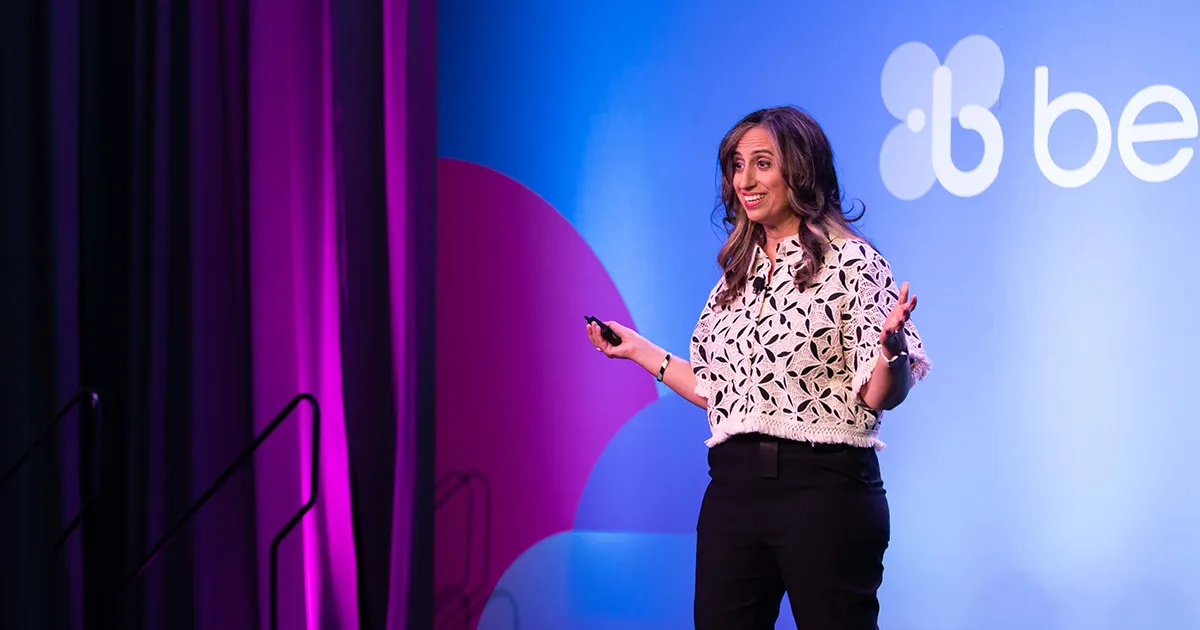
One conversation at Benevity Live! can change your whole year. Register now.
How to choose the right event
The question isn't whether to go — it's where your time is best spent. When evaluating any event, look for:
- World-class speakers who bring real practitioner experience — not just big titles, but people who have actually built and scaled programs like yours.
- Actionable takeaways you can bring back and use immediately, not just inspiration that fades by the following Monday.
- Networking events designed for genuine connection — roundtables, dinners and peer sessions where conversations go deeper than an exhibit hall exchange.
- Workshops that let you work through real challenges with peers and facilitators, not just absorb content from a stage.
Learn more about the top social impact conferences happening in 2026.
Make it count when you get back
The conference is the investment. What you do with it determines the return.
Before you go, get specific about what you want to take home — a framework, three new peer relationships and an answer to a challenge you've been sitting with. The more intentional you are going in, the more useful the sessions and conversations become.
After you're back, share what you learned. A quick debrief with your team turns your time at the event into organizational knowledge that extends well beyond your own development.
And if you're building your strategy for the year ahead, leveraging third-party resources for impact leaders can help you connect what you learned at a conference to what's possible in your program — from measuring social impact to building the business case for CSR in a more scrutinized environment.
The conversations that shape your program most often start in person.
The future of purpose at work, live
About the author