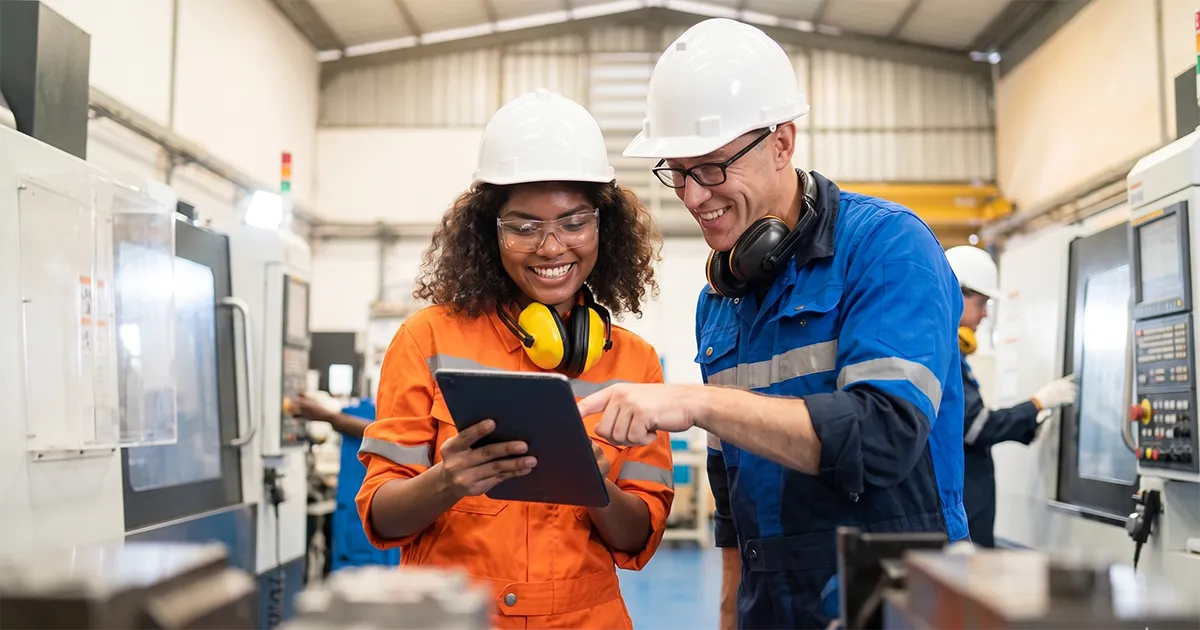
When 80% of your workforce operates without a desk, corporate email or regular access to a computer — and is spread across multiple plants — traditional methods of engaging them in your purpose program can often fall short.
Intranet posts go unread, email campaigns miss the people on the floor and annual giving campaigns only create a brief moment of connection before the day-to-day reality of shift work takes over.
The manufacturers who are getting this right aren’t just adapting their existing programs, they’re rethinking them to ensure they fit the daily reality of their deskless workforce.
Here are four ways leading manufacturers are meeting their deskless workers where they are — and boosting engagement across their entire workforce.
1. Go mobile-first to reduce friction
Most of your workforce is on the plant floor, between shifts or out in the field — and the best social impact programs are designed with that reality in mind.
A mobile-first approach is more than just having an app. It means building an experience that is intuitive, multilingual and designed for the moments between tasks — a lunch break, a commute or an evening at home. When employees can donate, sign up to volunteer or track their impact from a personal device in their own language, participation fits naturally into their lives.
The signal this sends to frontline workers is just as vital as the functionality: This program was built for you.
Impact in action: Toyota
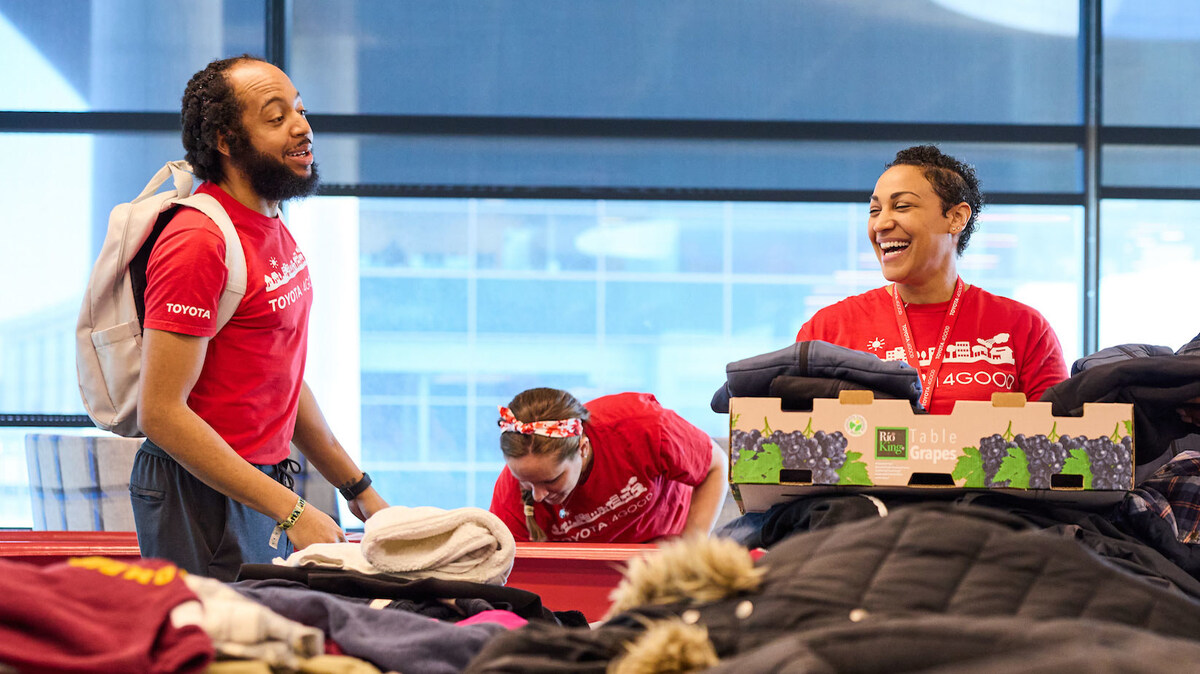
Toyota’s Corporate Social Responsibility (CSR) team wanted to engage 30,000+ production workers across 13 U.S. manufacturing centers. Applying their Kaizen philosophy of continuous improvement to their "Toyota for Good" program, they pivoted to digital screens and QR codes in breakrooms. This allowed employees to get involved via personal mobile devices.
By removing friction for deskless employees, Toyota saw a 224% increase in volunteer hours and a 286% increase in the number of volunteers.
2. Empower local leaders to drive engagement
One of a manufacturer’s greatest strengths is its people at the site level. Managers and team leads are your direct line to shift workers; they run the huddles, lead the meetings and set the tone on the plant floor. When these leaders are energized by your CSR goals and program, participation follows.
Equip these site-level champions with clear program details, upcoming opportunities and public recognition from senior leadership. This creates a culture of community connection at every level of the organization.
Impact in action: GAF Materials
As one of North America’s largest roofing manufacturers, GAF wanted to scale its community impact across 30 plants — without losing the local authenticity that makes community investment meaningful.
By leveraging the Benevity Enterprise Impact Platform and Reporting Studio, GAF empowered a network of local leaders with real-time grant data to make strategic, community-driven decisions. The combined solution also reduced the administrative load of nonprofit verification and local event sourcing, giving site champions time back to focus on driving engagement across their teams.
3. Build year-round momentum, not just annual campaigns
The shift from campaign to culture starts on day one. When new hires are introduced to a company’s social impact program immediately — through a seeded giving account or a volunteer opportunity during orientation — they enter with a sense of what the company stands for. This foundation makes every future touchpoint more meaningful.
Beyond onboarding, the strongest programs build a rhythm throughout the year. Matching campaigns, team challenges and milestone recognitions keep purpose visible and participation accessible regardless of the season.
Impact in action: Winnebago Industries
Winnebago Industries had a solid foundation in their “CommunityGO” program, and they wanted to take it further — transforming it from a once-a-year moment into something employees could feel year-round. Leveraging the Benevity Enterprise Impact Platform, Winnebago seeded every employee with $50 in CGO Cash to encourage early participation and ran double-matching incentives to build momentum. Participation grew from 8% to over 54%, the program raised $1 million in its first year and when the industry hit a downturn in year two, volunteer hours actually grew.
What sets Benevity apart is their solution-based mindset. We’ve brought them unique challenges — from supporting a dispersed and diverse workforce to finding creative program workarounds — and they’ve always shown up as true partners, helping us make the system work for our people. - Isadora Blanche, Community Impact & Inclusion Senior Manager, Winnebago Industries
4. Expand what participation can look like
Your deskless workforce brings specialized expertise to the job every day — trade skills, technical know-how and hands-on problem solving. Skills-based volunteering puts those capabilities to work for the community in ways that feel meaningful and natural.
Employees are looking for more meaningful, relevant volunteer opportunities and when they can contribute using the same skills they take pride in at work, volunteering begins to feel like an extension of their professional identity rather than an extra task.
Impact in action: GE Appliances
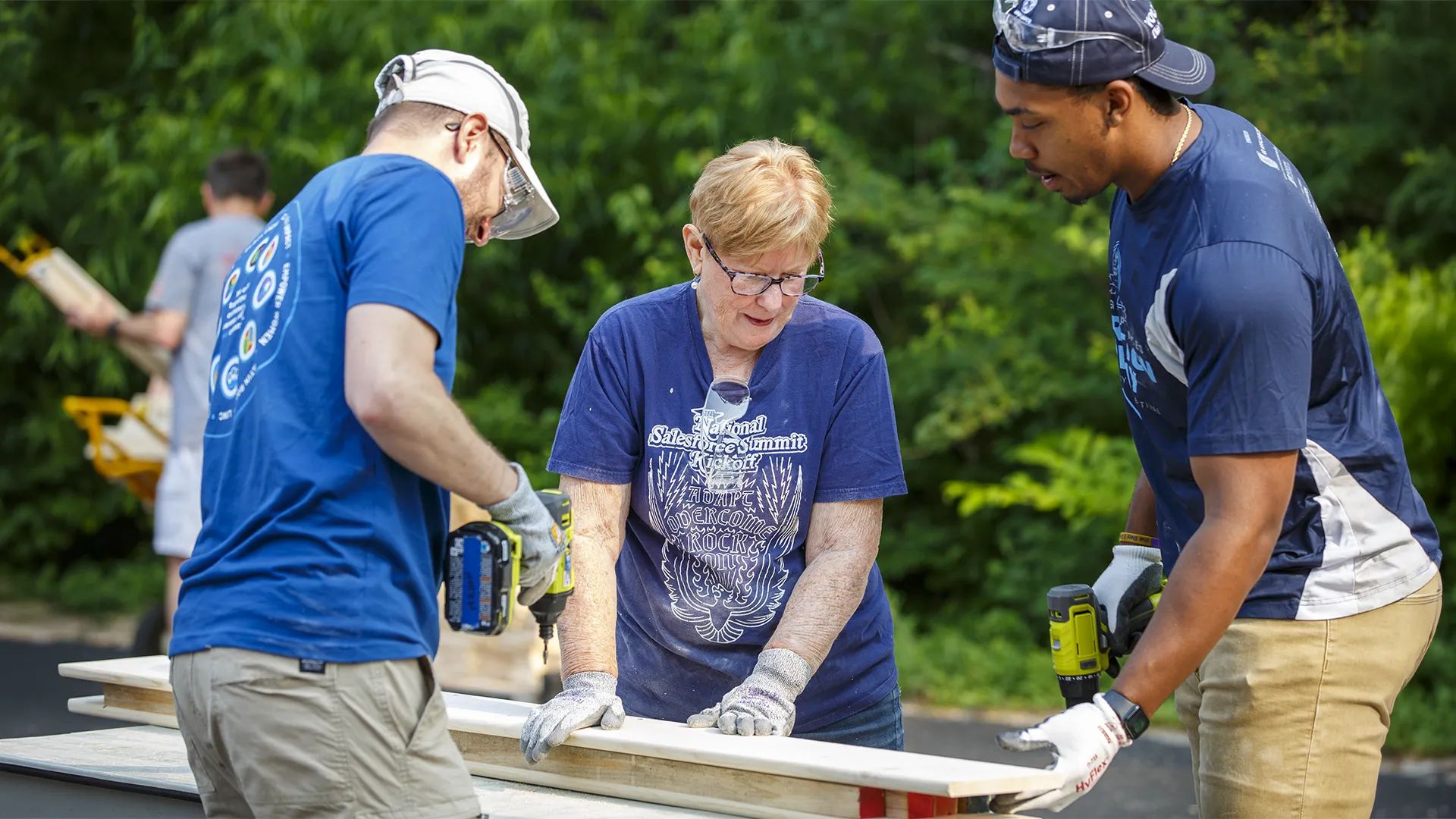
By listening to community needs and matching them with employee expertise, GE Appliances created volunteer initiatives that went far beyond box-checking.
Expanding beyond traditional volunteering tasks, GE Appliances built distinct, skills-based opportunities. In one project, design engineering teams participated in empathy-building sessions with visually impaired high school students, using those insights to build custom tactile kits. In another, employees transformed an electrical engineering lab into a toy lab where engineers rewired mechanical toys to make them accessible for children with dexterity challenges.
By aligning volunteer opportunities with professional skills their people use every day — and using the Benevity Enterprise Impact Platform to easily track those activities — GE Appliances drove a 134% increase in logged volunteer hours.
From shifts to shared purpose
Engaging a deskless workforce means rethinking access, empowering local champions and celebrating the specialized skills your people bring to the job every day. When you design your social impact programs for the reality of your workers’ lives, you don’t just boost participation — you build a resilient, purpose-driven culture that spans every site and shift.
Ready to scale your impact and engage every employee, no matter where they work?
Discover how the Benevity Enterprise Impact Platform can engage your deskless workforce.
About the author