Key takeaways
The Benevity Nonprofit Leadership Council (BNLC) is more than an advisory council – it’s a community that can help create insight, influence the sector, shape what we build and activate change.
The power imbalance between corporate firms and nonprofits can be solved by reducing burden, building capacity and defining the terms of the relationship.
The BNLC identified four areas of importance to explore — cross-sector convening, shared data and research, strengthening nonprofit partners and redefining generosity.
Since 2008, Benevity has been building the infrastructure that moves corporate giving and volunteering to the organizations doing the work. Throughout that time, nonprofit leaders have helped inform our thinking – from councils and workshops to product discussions and ongoing conversations about the needs of the sector. With the new Benevity Nonprofit Leadership Council (BNLC), we’re building on that foundation, creating a dedicated forum for nonprofit leaders to help shape our products, our research and the case we make to corporate partners on the sector’s behalf.
The ambition is practical: surface the challenges nonprofits are facing, test our assumptions against real experiences and build the evidence base that moves corporate-nonprofit partnerships past the transactional.
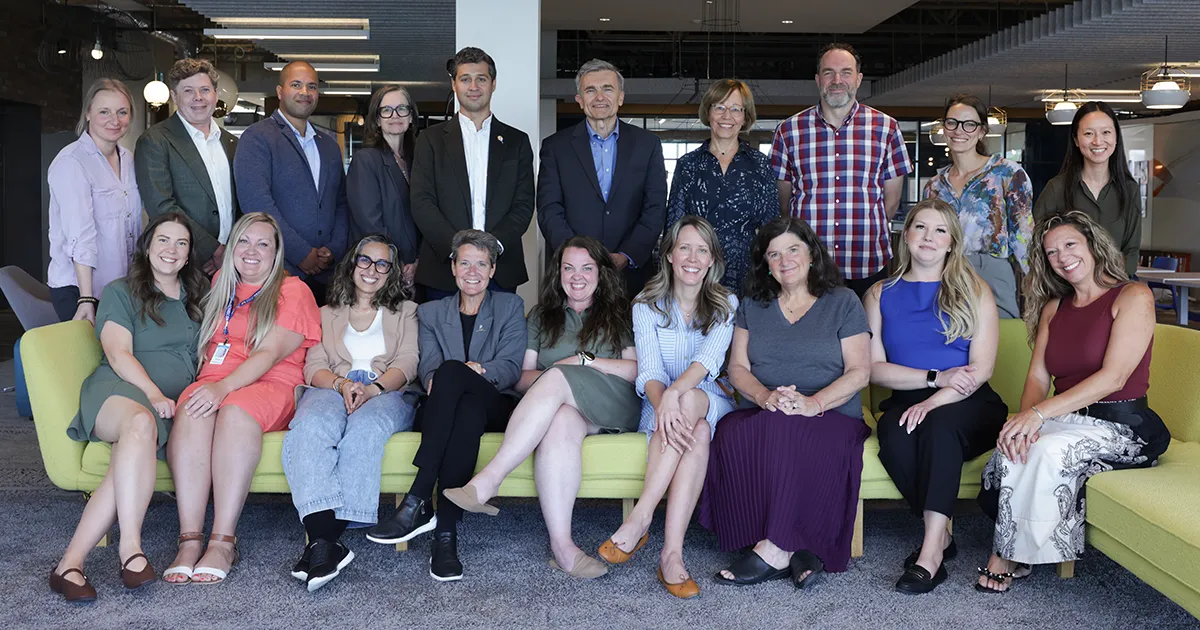
In July 2026, 13 of those nonprofit leaders came together in person for the inaugural gathering at the Benevity headquarters. They arrived from international relief, health research, education, civil liberties, advocacy and volunteering — organizations with very different missions and a remarkably consistent read on the sector as a whole. Over a day and a half they were generous with their expertise and unsparingly honest about where corporate partners, Benevity included, need to improve.
Below are the five most important takeaways from this year's event.
1. The aggregate data and the lived reality have come apart
The Benevity 2026 State of Corporate Purpose report, now in its sixth year, draws on two surveys: one gathering input from social impact leaders who run corporate giving programs, and the other from nonprofit organizations. This year the corporate side showed that giving rose almost eight points year over year, alongside record volunteering participation. The reality for nonprofits is not the clear success that data would suggest. Across the council, corporate revenue was flat or falling, and it took considerably more work to secure it. In one case, an organization was putting in the same effort, yet now receiving only 30 to 40% of the funds it used to get.
Both things can be true at once. Aggregate dollars can grow while individual partnerships shrink, budgets move from cash into volunteering and funding concentrates among fewer partners. But the distance between the reported picture and the lived one is itself a finding, and it should change how the sector reads its own benchmarks. Growth in the total pool is not evidence that all nonprofits are having the same experience.
2. Reporting is a tax nonprofits pay in unpaid overtime
Read the two surveys together and the gap is stark. On the corporate side, only 10% of companies expect to ask nonprofits for less reporting. A year earlier, 70% said they were actively considering changing their measurement methods to reduce the burden on nonprofits. Good intentions have not survived the pressure to prove that purpose investments are working.
On the nonprofit side, the cost of that reversal is visible. Almost half of nonprofits say corporate donors rarely or never fund the effort those reporting requests create, and 48% handle the additional workload through unpaid staff overtime.
This is rarely a company choosing to offload work. It is a company never seeing the work at all, because platforms and processes are designed so the burden lands out of view. Corporate teams routinely set conditions — including caps on what a nonprofit may pay its own staff — without visibility into the business model they are constraining.
The gap is fixable, but it requires that we ask difficult questions. For example, how many organizations never ask to be paid for this work because competition for funding makes asking feel too risky? Answering that is now on our research agenda.
3. Naming the power imbalance is the easy part
The asymmetry in corporate-nonprofit relationships is not controversial among nonprofit leaders. What is striking is where the awareness sits. Professional grantmakers are trained to be conscious of their power, while corporate teams generally are not.
What to do about it split our nonprofit leadership council. One line of argument holds that power is the wrong entry point, and the real problem is misaligned expectations that both parties could fix. Another pressed a more uncomfortable question: whether a power imbalance can be changed at all, and whether trying is a good use of scarce time.
The most workable reframing to emerge sidesteps the debate entirely — strengthening nonprofits is rebalancing power, by definition. Build capacity, reduce burden, improve the terms of the relationship, and the argument becomes academic.
4. Generosity is being redefined without the sector's permission
According to recent data from Giving USA, corporate giving accounts for about 7% of total U.S. giving while individuals account for 64%. Meanwhile, the Generosity Commission Report notes that fewer individuals are participating in giving year over year. Dollars are up, donors are down and giving is concentrating among a shrinking group.
That broader definition of generosity is beginning to show up in how people choose to contribute. In our 2025 Annual Impact Report, 468,000+ people demonstrated increased community or civic involvement, making this a new top 10 outcome for the first time. At the same time, 2025 saw the highest total number of corporate volunteering hours we’ve recorded. Together, these signals point to a growing appetite to think beyond traditional definitions of giving and volunteering — and to recognize the many ways people contribute to their communities, from formal service to civic and advocacy-oriented action.
Generosity, in other words, is already being redefined through voice, activism and purchasing power, and it's happening without the sector's consent or acknowledgment. The open question is whether the sector grows into that space or spends its energy defending the categories it currently measures.
5. AI anxiety is concentrated on the corporate side
Corporate purpose teams are caught between hope and hesitation. While 82% of companies believe AI must be used to increase nonprofit capacity, only 16% say AI is a core part of their own impact strategy. Among large corporate firms, 75% worry about excluding smaller, community-led organizations and 68% worry about amplifying well-resourced nonprofits. Ethical hesitation of that kind is most pervasive at the largest companies, which is precisely where the capacity to work through it should sit.
The council's own priorities landed differently. Asked to rank 12 opportunities where Benevity and its members could work together, the group placed a shared standard for responsible AI last. That result is worth sitting with rather than explaining away. It suggests AI is not what is currently holding organizations back, however much it dominates the conversation around them.
One development deserves wider attention regardless: some corporate partners have begun using AI to screen nonprofits for credibility and reputation before agreeing to a first meeting. If that practice spreads, a nonprofit's public footprint starts doing work its fundraising team never sees.
What's next
When we asked the council to help create and rank 12 key opportunities to work together, four emerged clearly at the top:
- Lean into how Benevity is uniquely able to convene nonprofit and corporate executive communities in the same room
- Share data and research on collective challenges facing the Benevity network and partners
- Strengthen nonprofit partners directly in the Benevity nonprofit network
- Redefine generosity for the next generation
The council was also clear about what it wants to become — a working community of co-creators with a real route into providing perspectives that can help inform how the sector's case gets made, rather than an advisory group that meets, comments and disperses. The bar the group set for itself was refreshingly concrete: prove this is different by implementing real change.
That is the bar we're working toward with the BNLC. The council reconvened virtually this fall to coalesce and align on the path forward for our foundational year, creating the space to stay connected and keep the conversation moving.
Finally, we asked every leader in the room for one thing to pass along to corporate partners. One answer stands in for the rest: “Generosity is infectious, and nonprofit partners can help you unleash it.”
About the author